Trending

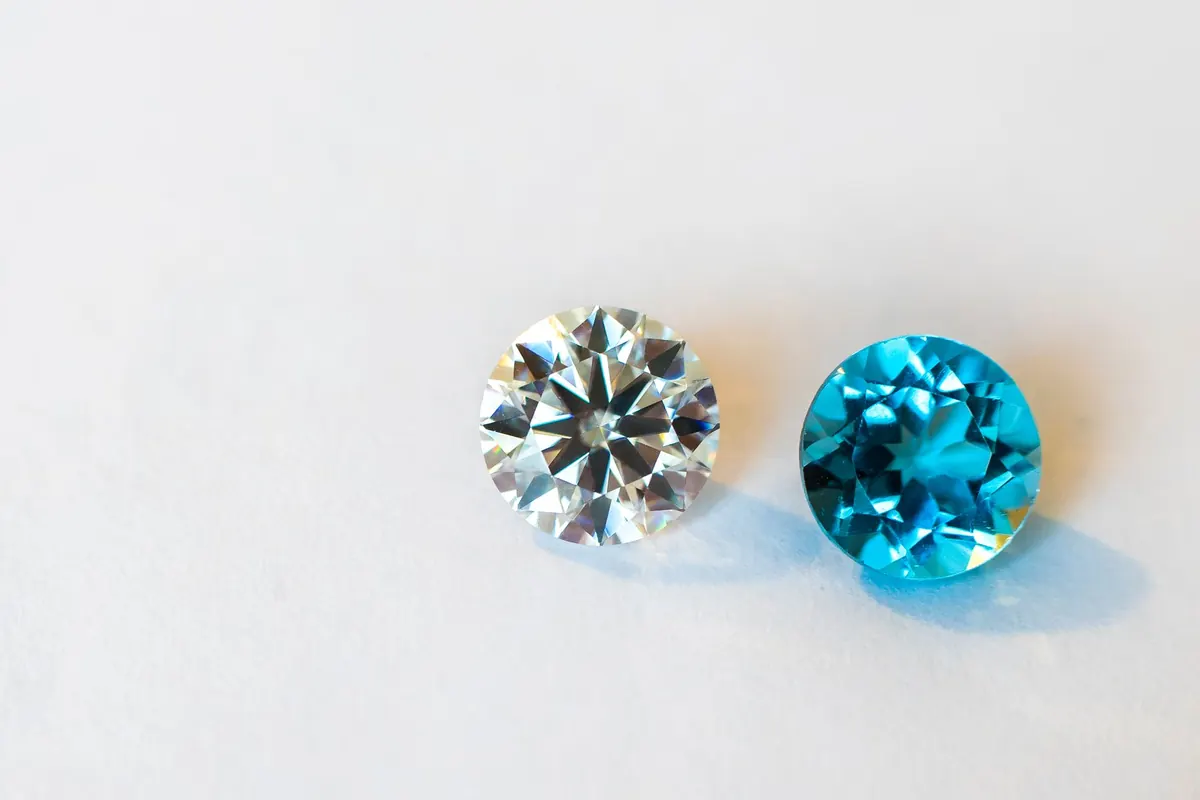
Two rings, one gemstone, and a decision that usually comes down to a single question: do you want colour, or do you want the look of a diamond? White topaz and blue topaz are the same mineral, but they behave very differently once set. One reads as clean and classic; the other announces itself as a gem. Here is how they compare on the things that actually matter when you are choosing a ring someone will wear every day.
Topaz is aluminium fluorosilicate with a hardness of 8 on the Mohs scale, which puts it above quartz and below corundum. White topaz is usually naturally colourless, sometimes gently heated to clear a brown or yellow tint. Blue topaz, on the other hand, is almost always treated: the colour is produced by irradiation, often followed by heating to settle the shade into something stable.
That difference explains the price gap in most jewellers' cases. Colourless topaz is abundant, so it is inexpensive in large sizes. Fine blue topaz is a treated product with a controlled colour, and the deeper shades cost more than the paler ones. Natural blue topaz exists, but it is rare and usually pale, so treat any vivid blue stone as treated and expect the seller to say so.
White topaz is bright, clean and cool. It has a refractive index of roughly 1.6, against diamond's 2.4, so it looks glassy and clear rather than fiery. In a well-cut round brilliant or oval, that crisp look is appealing in its own right. Set it in white gold or platinum with a halo or a pavé band and it moves closer to a diamond's overall impression, though it will never flash the same rainbow sparks in candlelight.
Blue topaz is about the colour, and the trade names are worth learning before you shop. Sky blue is pale and delicate, Swiss blue is vivid and pool-like, and London blue is a deep, slightly steely blue that suits yellow or rose gold beautifully. Because blue hides inclusions better than white, you can go large: a 10mm oval is easy to find and does not cost the earth.
Shape matters too. Baguette and emerald cuts flatter white topaz's clarity, while cushion, oval and pear cuts show off blue topaz's depth of colour. If you have a warm skin tone, try rose or yellow gold with blue; if you are fair and cool-toned, white metal with either stone tends to look cleaner.
Both stones are equally hard, so this is not a point of difference — but it is the area where buyers most often get caught out. Topaz has perfect basal cleavage, meaning a sharp knock at the wrong angle can chip or even split the stone. Thin, elongated cuts such as marquise and pear are the most vulnerable, and any prong setting leaves the edges exposed.
For a ring worn daily, a bezel or half-bezel setting is the sensible choice, and a halo adds a little protection around the girdle. Take the ring off for gym sessions, gardening and DIY. Colour in properly treated blue topaz is stable, but avoid stones described as "coated" — coatings on any gem can scratch and fade with wear, which is not what you want from an engagement ring.
Topaz is the November birthstone, and its name is usually traced either to the Sanskrit tapas, meaning fire, or to the Greek island of Topazios. Beyond that, the associations are tradition rather than fact, and they are still useful when you are choosing. Blue topaz is often linked with calm, clear communication and loyalty, which makes it a popular choice for a ring that doubles as "something blue". White topaz carries quieter associations with sincerity, hope and simplicity — a good fit if you want a stone that does not compete with the moment.
Neither stone will strain a sensible budget. The setting, the metal and the quality of the cut will usually matter more to the final price than the gem itself, and both let you buy a far larger stone than diamond or sapphire would allow for the same spend.
Ask for treatment details in writing and buy from a jeweller with a clear returns policy. If the ring is being insured, have it valued properly; for anything involving insurance or significant money, it is worth taking professional advice from a qualified valuer.
Pick white topaz if the aim is a clean, diamond-adjacent look, if your partner dresses in cool tones, or if you want a stone that will not clash with a coloured wedding band. Pick blue topaz if you want the ring to feel unmistakably gem-set, if the wearer loves blue, or if you are drawn to a deeper, moodier shade that photographs well.
If sparkle is the priority above all else, look at moissanite or a lab-grown diamond alongside topaz before deciding. It is a fair comparison, and seeing all three side by side under shop lighting usually settles the question in minutes.
Topaz is easy to live with as long as you keep the routine simple.
Choose a design that protects the edges of the stone and a metal that suits daily wear, and either colour will serve you well for decades. The right ring is the one the wearer does not want to take off — and with topaz, you can afford the setting that makes that easy.
Photo: ashhsu / Pixabay