Trending

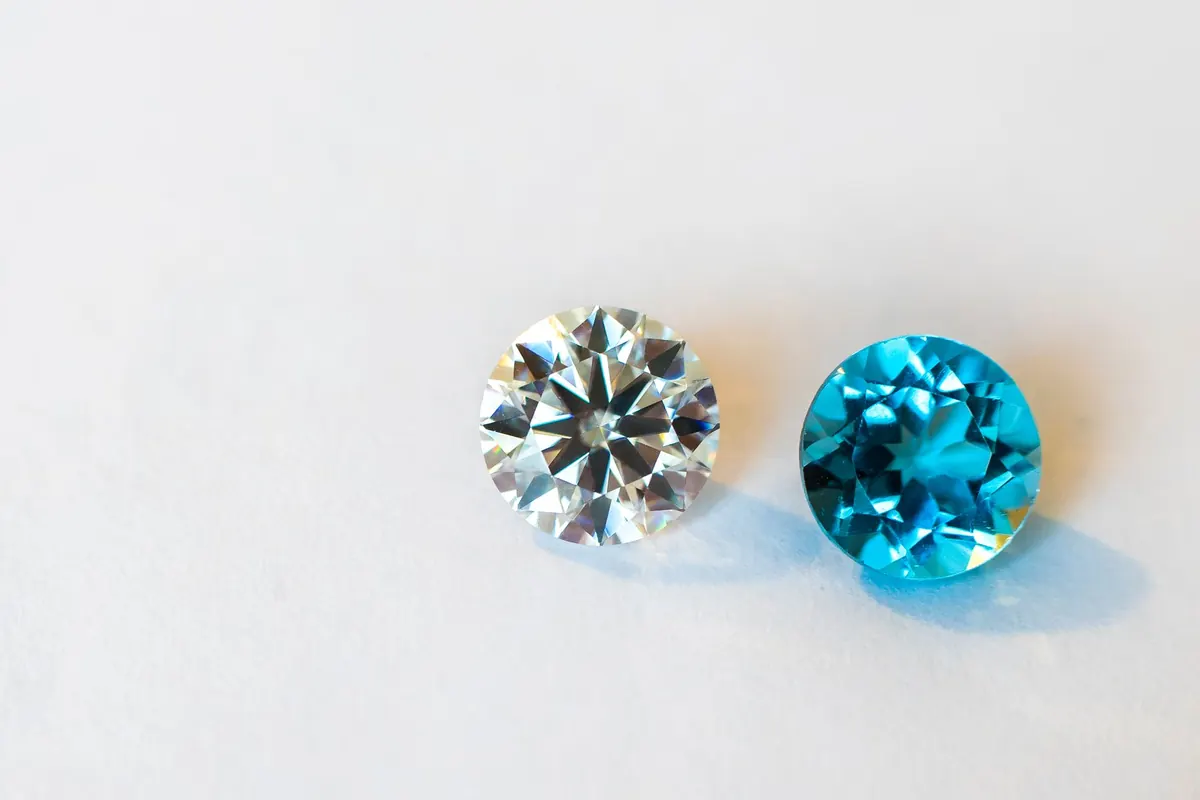
Choosing a loose topaz is a different job from choosing a finished piece of jewellery. With the setting out of the way, there is nothing to distract you from the stone itself: no metal hiding a dull patch, no claw covering a chip on the girdle. That is a good thing, but it does mean you need to know what you are looking at. Here is how to judge colour, clarity, cut and carat before you commit a stone to a ring, pendant or pair of earrings.
Topaz runs from colourless (usually sold as white topaz) through pale sky blue to the deep, steely London blue, and on to pink, peach, sherry and golden. Colour drives value more than anything else here, so give it the most time.
View the stone face up on a plain sheet of white paper in daylight. Coloured cloths flatter weak stones, and shop spotlights can make a pale blue look vivid. Ask to see it against your skin as well — that is the colour you will actually live with.
Look for three things. Hue is the basic colour. Tone is how light or dark it is. Saturation is how rich it looks. A blue with a grey or brownish edge will look tired next to a cleaner stone, and a golden topaz that turns brown in daylight is not the bargain it appeared under a lamp.
Most blue topaz began as colourless or nearly colourless material and was irradiated and heated to produce a stable blue. Sky, Swiss and London are trade descriptions of shade rather than places, and two stones with the same label can look noticeably different. Buy the individual stone, not the name on the tag.
Imperial topaz — the natural pink, orange and golden-brown material — is the scarce one, and it is untreated. The word is used loosely in the trade, sometimes for treated pink stones that are nothing like it. If the colour is why you are paying more, ask directly whether it is natural and untreated, and have that written on the receipt.
Mystic topaz and other rainbow finishes get their look from a thin metallic coating on the surface. They can be striking in a pendant, but the finish sits on the outside of the stone, so keep abrasives away from it and treat it gently.
Topaz is usually found in reasonably clean rough, so a decent stone should look clear face up. Fine internal veils are common, and if you cannot see them from 30cm away in ordinary light they will not bother you.
What should give you pause is anything structural. Topaz has perfect cleavage in one direction, which means a sharp knock at the wrong angle can split it — and a ring takes knocks. Fractures reaching the surface, cracks running across the stone, chips along the girdle and dark, obvious inclusions all make that outcome more likely. Hold the stone in tweezers against a lamp, use a 10x loupe, and run a fingernail gently around the girdle. If your nail catches, there is a chip.
Cut is where buying loose pays you back. A well-cut oval, cushion, octagon, round or pear should look bright and lively: tilt it slowly and the light should keep moving inside. Three faults to watch for:
Then ask to see the stone in profile, resting on its table. Depth matters for more than beauty. A deep, heavy-bellied cut weighs more while looking smaller than a well-proportioned stone of the same carat weight, and it will need a taller setting that catches on sleeves.
Carat measures weight, nothing more. Two stones of the same weight can look very different because one is cut deeper and spreads less across the top. Ask for the millimetre measurements — length, width and depth — and compare those with the setting you have in mind.
Think about where the stone is going. A ring is the most demanding home: too deep and it will stand tall and knock against things; too wide and it will twist on the finger. Earrings and pendants are more forgiving, and a matched pair is far easier to buy together than to assemble later.
Ask the seller to confirm in writing what has been done to the stone — irradiation, heating or coating — along with its weight and measurements. A short video filmed in daylight while the stone turns slowly tells you more than a page of studio photographs.
Check the returns window before you pay, particularly online. A loose stone is easier to send back than a setting, so keep it unworn and in its packet until you are sure, and keep the paperwork with it.
For cleaning, warm water with a drop of mild washing-up liquid and a soft brush is kind to most topaz. Skip the ultrasonic and steam cleaners for coated stones or anything with a fracture, and let a jeweller handle it if you are unsure. If you are spending a serious amount, have the finished piece
Photo: Jimmy Chan / Pexels