Trending


Blue topaz is one of the friendliest stones in the jewellery case: bright, hard enough for everyday rings and usually very affordable. What surprises many buyers is how much of that colour is made rather than mined. Heating, irradiation and coating are all routine in the topaz trade, and none of them is a scandal in itself. But a treatment changes how you should clean a stone, how you should store it, and what is a fair price. Knowing the difference takes about five minutes and can save you from an expensive mistake.
In gemmology, a treatment is anything done to a stone after it is mined to change or improve how it looks. Cutting and polishing do not count. Heating, irradiation, coating and diffusion do. Some treatments affect the whole stone, others sit only on the surface, and that difference matters far more than the trade names you will see on a listing.
Treatments are usually stable, but "stable" is not the same as "permanent". A heated or irradiated topaz will keep its colour in normal wear. A coated topaz can lose its finish where facets rub against skin, metal or other stones. Ask which category your stone falls into before you buy it.
Heating is the oldest trick in the book. Gem cutters have used it for centuries because it works with the stone rather than on top of it. In topaz, gentle heating is used to shift yellowish brown rough towards pink and reddish pink, and it is also used to lighten and settle the colour of material that has been irradiated. The result is a colour that runs through the stone, not a film on the surface, and it will not fade in sunlight or wash out when you clean your jewellery.
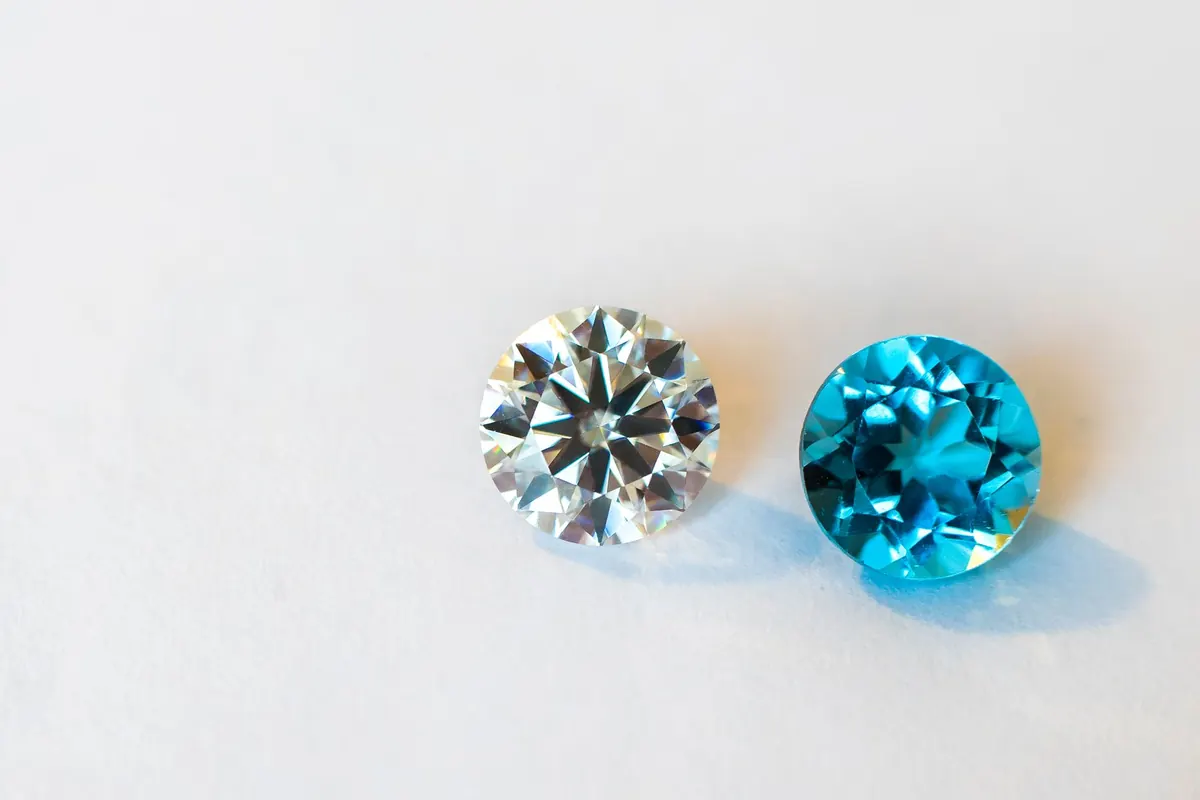
Most blue topaz begins life as colourless or very pale material. Irradiation, sometimes followed by heating, is what turns it blue. You will see the results described as Sky, Swiss and London Blue, which simply describe the shade, from light and airy through to a deeper, slightly steely blue. The colour is generally stable and permanent in everyday wear.
Material is treated in controlled facilities, not in a back room, and reputable suppliers follow established waiting periods before releasing it to the trade. If you are curious, ask your seller where their blue topaz came from and how it was treated. A serious dealer will answer without flinching.
Coated topaz goes by names such as Mystic, Rainbow, Azotic or Titanium topaz. A thin metallic film is bonded to the stone, usually concentrated on the pavilion and lower facets, producing a shifting rainbow sheen across a colourless base. It is an eye-catching look and can be a lot of fun in a pendant or a pair of earrings.
The catch is that the colour is a coating. It can scratch, dull or wear away at facet edges, particularly on rings that see daily knocks. It cannot be re-polished, because polishing would remove the very thing creating the effect. Coated stones are the cheapest category of topaz for exactly this reason, and they should be priced accordingly.
A less common treatment is diffusion, where colouring elements are pushed into the surface layer at high temperature. It is difficult to detect without a gem laboratory. If a blue topaz is offered at a strange price with a strange story, that is your cue to ask questions.
Rarity drives price, and treatment is one of the clearest ways to judge it.
One more point on resale. Treated topaz, including blue, rarely holds value when you come to sell it. If you want a stone that behaves like an investment, that is a different purchase entirely and you should buy untreated material with paperwork from a dealer who knows the market.
Topaz has a strong cleavage plane, which means it can chip or split along one direction if it is knocked or subjected to sudden temperature changes. That makes gentle care sensible for every topaz, treated or not.
Most topaz sold in the UK has been treated, and in the case of blue topaz that treatment is what makes the stone affordable and widely available. Ask the questions above, pay for colour and cut rather than for stories, and clean coated stones gently. If you are spending a significant sum on an untreated pink or imperial topaz, or if treatment status affects the value of a piece you already own, take advice from a qualified gemmologist or a jeweller you trust before you buy or sell.
Photo: PDPics / Pixabay